
A Comprehensive Overview of the Viral Disease and Its Global Impact
Monkeypox is a viral disease caused by the monkeypox virus, a member of the Orthopoxvirus genus of viruses, which also includes the variola virus that causes smallpox. The virus was first identified in 1958 from monkeys in a Danish research laboratory and named after it. The first human case was recorded in 1970 in the Democratic Republic of Congo (then Zaire). Over the recent years, monkeypox has drawn global attention due to several outbreaks from its endemic regions, more specifically, in 2022, an outbreak that set off massive concern worldwide.
Transmission of Monkeypox
Monkeypox can be transmitted through two primary routes:
There are two key modes of transmission in Monkeypox; zoonotic disease transmissibility is viral through animal-to-human and human-to-human transmission. The knowledge of these routes of transmission becomes very vital in trying to put in place interventions to contain the spread of the virus and in effect managing the outbreaks effectively.
- Animal-to-Human Transmission:
The initial transmission of monkeypox to humans often occurs through direct contact with infected animals. This can happen in several ways:
Direct: This includes direct contact with blood, bodily fluids, or skin/mucosal lesions of infected animals. This poses a considerable risk when an individual is in the process of hunting, butchering, or preparing meat from bush animals.
Animal Bites or Scratches: The virus is transmissible even from minor bites or scratches from an infected animal. This is usually common in areas of very close interaction with wildlife.
Ingesting contaminated food, especially undercooked meat, or other products obtained from infected animals, is a common mode of transmission. At first, monkeypox was thought to be related to monkeys, but the virus was found to be more common in rodents, especially squirrels, rats, and dormice that are believed to act as the primary reservoir.
Given the close interaction between humans and wildlife in certain regions, particularly in Central and West Africa, animal-to-human transmission is one of the most important concerns of all.
- Human-to-Human Transmission:
Once the human population is exposed to the virus, it can easily be transmitted through the following ways:
Respiratory Secretions: There is also a mode of transmission with monkeypox by prolonged face-to-face contact. This is most important in household and health care settings where there is close and prolonged contact. Direct Contact with Lesions: The infection can also be spread due to direct contact with the skin lesions or rashes of an infected individual. It is a major concern for such a mode of transmission, particularly through environments where physical contact is common.
Infected Objects: Items such as bedding, clothing, or towels that have come into contact with an infected person can be contaminated with the virus. Direct exposure by a naked hand can cause infection. Sexual Contact: Among the various interesting trends reported during the outbreak of monkeypox in 2022, sexual contact was recognized as the main mode of viral spread, along with other close physical contacts. This seemed to bring forth concerns about the potential of the virus to establish itself within specific social networks and pushed the public health authorities to talk more regarding interventions and prevention strategies. This would, therefore, require comprehensive prevention of the wide range in which monkeypox can spread. Public education on preventive practices in relation to contact with wildlife, hygiene promotion, and early isolation of suspected cases are at the core of the overall process.
“Monkeypox is a viral disease that also has many similarities to smallpox, but it usually is milder. However, monkeypox is a potentially fatal illness with a unique constellation of symptoms and patterns that set it apart from all other illnesses, including smallpox.

Presentation of Symptoms in Monkeypox
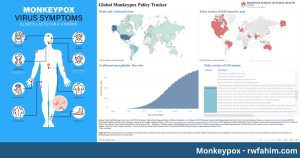
The course of monkeypox presentations usually starts with an early stage of nonspecific signs; these belong to the usual presentation in most viral infections. These early symptoms include:
- Fever: Sudden rise in body temperature, mostly one of the early symptoms to occur.
- Headache: Severe and persistent headache is quite common.
- Muscle Aches (Myalgia): Generalized muscle pain, especially in large muscles.
- Back Pain: Severe discomfort in the back is quite common.
- Chills: Feeling cold with shivering, which normally accompanies the fever.
- Fatigue: An overwhelming sense of tiredness and lack of energy.
One of the cardinal signs that distinguishes monkeypox from smallpox and other related diseases is lymphadenopathy, which refers to the swelling of lymph nodes. It may occur in the neck, axillae, or inguinal areas; this is relevant for diagnosis as it does not occur in smallpox.
Rash Progression
After prodrome, usually 1 to 3 days after, but sometimes up to a week, a papular rash develops. The rash typically starts on the face and then spreads to the rest of the body. Impressively, it can cover the palms of the hands, the soles of the feet, and even the mucous membranes-such as the inside of the mouth and genitals.
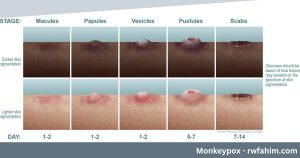
The rash goes through a number of very typical stages:
- Macules: Flat, discolored areas of the skin.
- Papules: Raised areas that are often red and firm.
- Vesicles: Small, fluid-filled blisters.
- Pustules: These are deeper, more painful blisters filled with pus.
- Scabs: The pustules finally crust over and form scabs. These scabs will fall off as the skin heals.
The whole rash progression from macules to scabs usually takes 2 to 4 weeks. In this period, the patient is infectious and stays so until he sheds all scabs with the complete formation of new skin.
Severity and Risks Associated with Monkeypox
Though monkeypox is generally milder than smallpox, it can still raise health concerns, especially for a few select populations. They are as follows:
- Children: Younger individuals usually face more devastating repercussions.
- Immunosuppressed Individuals: Complications are likely to develop in such people.
- Individuals Residing in Regions Having Poor Medical Facilities and a Shortage of Treatments: The disease is more risky in those areas.
The intensity of the disease may be dependent on the genetic clade of the virus. Two primary clades of the monkeypox virus:
- Central African (Congo Basin) Clade: It is seen to produce a more severe disease, higher in its mortality rate and extensive in the distribution of its rash.
- West African Clade: Is considered in general to be one that is mild in nature regarding its manifestation of symptoms and also has a low mortality rate. The agent causing most recent outbreaks outside Africa belongs to this clade.
Monkeypox is an infection caused by a virus whose symptoms have a close resemblance to smallpox, though milder in intensity. However, the disease can have serious health implications in very vulnerable groups of people. Therefore, the recognition of symptoms early and understanding how the rash develops its progression is key towards early detection and good disease management. The public health efforts are directed at containment of the disease, especially in areas where it becomes endemic, so as to prevent wider spread and reduce its impact on communities.”
Prevention and Treatment
Preventing monkeypox requires a multifaceted approach:
- Vaccination: The smallpox vaccine offers some protection against monkeypox. Additionally, a newer vaccine specifically designed for monkeypox (JYNNEOS) is available in some regions. Vaccination is particularly important for healthcare workers and those in close contact with infected individuals.
- Isolation and Hygiene: Infected individuals should be isolated to prevent the spread of the virus. Adhering to strict hygiene practices, including handwashing and the use of personal protective equipment, is crucial in controlling outbreaks.
- Antiviral Treatment: While there is no specific treatment for monkeypox, antiviral drugs like Tecovirimat may be used in severe cases. Supportive care, including hydration and treatment of secondary bacterial infections, is also essential.
The 2022 Global Monkeypox Outbreak
In 2022, the world was gripped by an unprecedented outbreak of monkeypox, which raised numerous concerns in public health. Unlike its predecessors, which remained mainly in regions where the virus is endemic, this outbreak reached several non-endemic countries across Europe and North America. What this meant was a very significant change in the epidemiology of the virus, for it spread explosively through close personal contact and within sexual networks—something not seen on such a scale during any previous outbreak.
Nature and Spread of the 2022 Outbreak
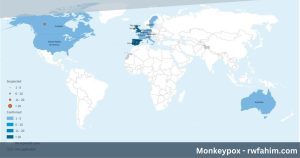
Historically, outbreaks of monkeypox have mainly been limited to Central and West Africa, where the virus is considered endemic and is usually spread through contact with infected animals. This changed with the outbreak of 2022, which indicated that this disease-transferring agent could cross boundaries like never before. The outbreak started in May 2022, and cases appeared quickly in countries that have never reported significant numbers of monkeypox infections before. Importantly, the United Kingdom, Spain, France, Germany, United States, and Canada witnessed a sharp rise in the number of cases.
The 2022 epidemic spread pattern differs from known transmission patterns: a large share of the spread occurred via physical contact, with high clustering amongst networks of MSM. This warranted concern and led to more focused public health responses. Further, the accelerated epidemic spread in these communities emphasizes the need for understanding and intervening with the underlying social and behavioral factors that affect the epidemic dynamics.
WHO’s Response and the Declaration of a Public Health Emergency
The World Health Organization (WHO) just managed to act in the nick of time as the crisis became emergent. On July 23, 2022, WHO declared the outbreak a Public Health Emergency of International Concern—the highest level of alert WHO can trigger. With this declaration came the seriousness of the situation and the call for coordinated global action. The PHEIC designation aimed to galvanize international efforts to contain the outbreak, improve surveillance, and enhance public awareness. The WHO underscored that early detection, vaccination, and good communication strategies were of critical importance in controlling the outbreak. In a secondary phase, many countries rapidly scaled up their surveillance system, expanded laboratory testing capacities, and started vaccination campaigns among high-risk populations. Public health communications have been especially burdened with educative information on the mode of transmission, symptoms, and prevention to a population that is at risk.
Wider Implications 2022 Outbreak
The 2022 monkeypox outbreak was a harsh reminder of the vulnerability zoonotic viruses pose to shifting serious public health emergencies beyond their assumed classic borders. This spillover into nonendemic regions underscored core questions about global health security and the preparedness of systems to deal with emerging infectious diseases. This too brought into sharp focus the integration of health concerns on the global level, as the quick spread of monkeypox illustrated the challenges of effective prevention and control of infectious diseases within a period of heightened international travel and social interaction. The outbreak spurred discussions on the need for increased collaboration, more enhanced International communications, better networking of surveillance, and importantly, preparation to face any adversity concerning threats to Public health.
The Role of the WHO and CDC in Controlling This Outbreak
Throughout the outbreak, WHO and CDC have been the leads, guiding the world on how to respond to the outbreak through timely updates, technical advice, and recommendations for healthcare providers and communities at large. The CDC was very helpful; they worked with U.S. state and local health departments to monitor the situation and conduct contact tracing. WHO focused its efforts beyond immediate outbreak management and included long-term strategies for preventing the continued outbreak of monkeypox. This included reinforcing surveillance in endemic regions, assisting with research in virus behavior and transmission, and advocating for access to vaccines and treatment.
Lessons Learned and Future Directions
The major public health preparedness, rapid response to, and international collaboration that emerged with the 2022 monkeypox outbreak is the need for sustained vigilance and the understanding of the complex drivers of the spread of zoonotic viruses. How the 2022 monkeypox outbreak is an alert to the world that a new and unexpected health challenge can manifest at any point, seeking a holistic and globally unified approach.
Global and Regional Impacts
The global spread of monkeypox has had significant implications for public health, particularly in regions like Africa, where the virus is endemic. The Central African clade, associated with more severe disease, has historically caused higher mortality rates in affected areas. In contrast, the West African clade, although less deadly, still poses a threat to vulnerable populations.
- Africa: The burden of monkeypox in Africa has been significant, with frequent outbreaks reported in Central and West African countries. The Africa CDC and WHO have been at the forefront of managing these outbreaks, promoting vaccination, and improving public health infrastructure to respond effectively.
- Europe and North America: The 2022 outbreak marked a shift in the epidemiology of monkeypox, with countries in Europe and North America reporting significant case numbers. Public health authorities in these regions have emphasized the importance of vaccination, public awareness campaigns, and early detection to prevent further spread.
Monkeypox in 2024: The Current Situation
As of 2024, monkeypox remains a global health concern, particularly with the emergence of new strains and clades. The ongoing monitoring of monkeypox outbreaks, particularly in non-endemic regions, highlights the virus’s potential to cause significant disruptions to public health. The WHO continues to categorize monkeypox as a public health emergency, urging countries to remain vigilant and prepared for potential outbreaks.
Key Takeaways on Monkeypox
- What is Monkeypox? Monkeypox is a zoonotic viral disease caused by the monkeypox virus, closely related to the smallpox virus.
- Transmission: It can spread from animals to humans and between humans, primarily through close contact.
- Symptoms: Fever, headache, muscle aches, swollen lymph nodes, and a characteristic rash that progresses through multiple stages.
- Prevention and Treatment: Vaccination, isolation, hygiene, and, in severe cases, antiviral treatments are essential for managing monkeypox.
- Global Impact: Monkeypox has caused significant outbreaks, particularly in Africa, with recent global outbreaks raising concerns about its spread in non-endemic regions.
- 2024 Outlook: The virus continues to be a global health challenge, with ongoing efforts to monitor, prevent, and treat outbreaks.
Monkeypox’s resurgence in recent years underscores the importance of understanding this disease’s transmission dynamics, prevention strategies, and global impact. As we move forward, continued research, public health interventions, and global cooperation will be critical in mitigating the threat posed by monkeypox and similar zoonotic diseases.